
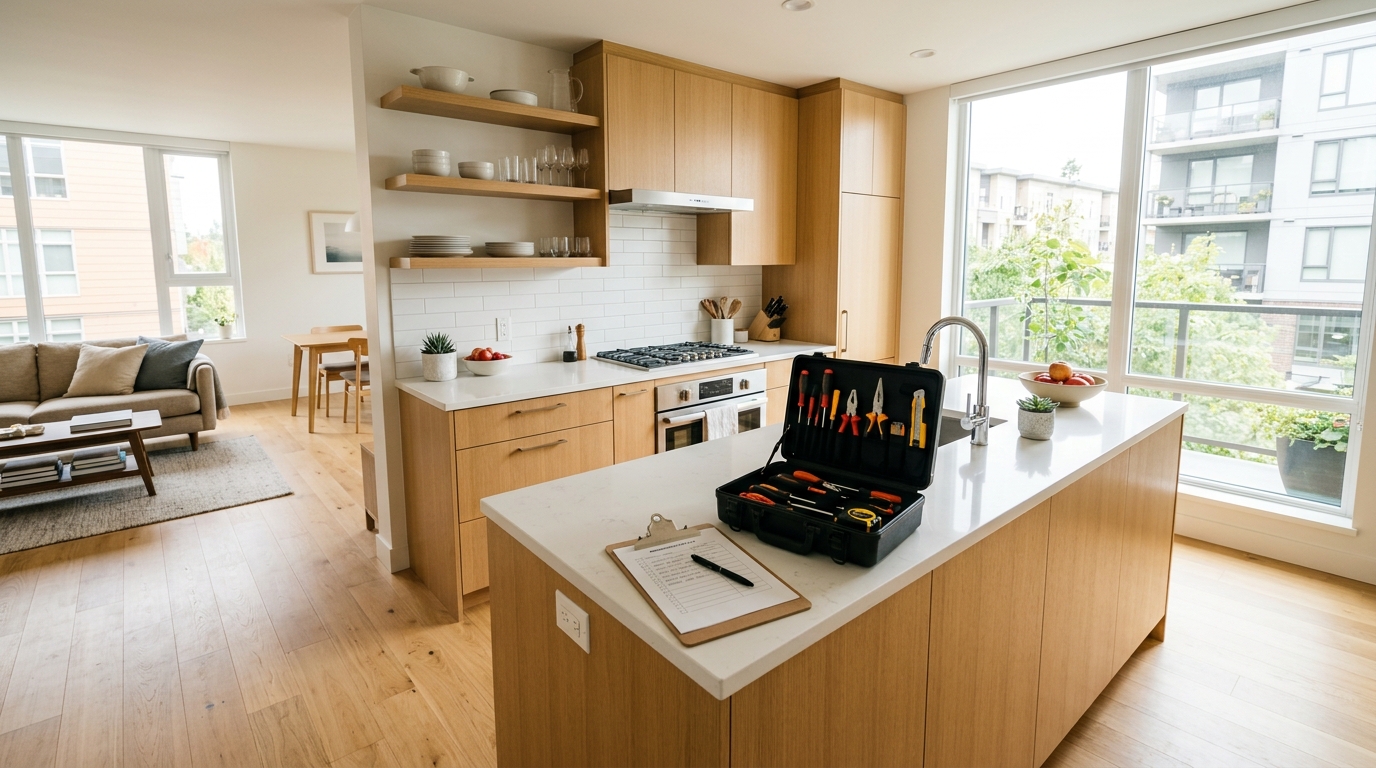
Gibraltar landlords must comply with the Landlord and Tenant Act 1983 (updated 2013), keeping all rental properties habitable throughout the tenancy. Key legal duties include keeping the property habitable under the Landlord and Tenant Act 1983, safe electrics to BS 7671 standard, working smoke and CO alarms, and a valid Energy Performance Certificate issued by DECC. Gas safety checks are strongly recommended but are not a statutory annual requirement in Gibraltar.
Your Legal Obligations as a Gibraltar Landlord
Owning a rental property in Gibraltar carries real legal weight. The Landlord and Tenant Act 1983 (updated 2013) sets the baseline: properties must be maintained to a habitable standard throughout the tenancy. Failure to comply can result in fines, legal action from tenants, and difficulties with insurance claims.
This guide covers every maintenance obligation Gibraltar landlords need to know, from gas and electrical safety through to fire regulations and energy performance certificates.
Gas Safety
Gibraltar has no statutory requirement for annual gas safety inspections (unlike the UK, Gas Safe registration does not apply here). Even so, if your rental property has gas appliances, including boilers, cookers, or gas fires, it is strongly advisable to have them checked periodically by a qualified gas engineer, keep a safety record, and share a copy with your tenants for peace of mind.
Gas safety checks in Gibraltar are quoted per job rather than at a published fixed rate, so get a couple of quotes. Ask any engineer you use for evidence of their qualifications and competence for the specific appliances in the property. When seeking a suitable engineer, ask for certification relevant to the appliance type rather than assuming any UK-based registration scheme applies locally.
Electrical Safety
All electrical installations must be safe and maintained to BS 7671, the wiring standard Gibraltar electricians work to. Gibraltar has no published HMO licensing regime and no legally mandated inspection cycle for standard tenancy properties, but you remain fully responsible for the safety of the installation throughout the tenancy.
Good practice is to commission a full inspection every five years or so, at the start of a new tenancy, or whenever a concern arises. Any fault identified as urgent must be fixed before the property is let or immediately upon discovery during a tenancy. All electrical appliances you supply must be safe and in working order.
Energy Performance Certificates
An Energy Performance Certificate (EPC) is mandatory on every new tenancy and at point of sale in Gibraltar. EPCs are issued under the framework overseen by the Department of the Environment and Climate Change (DECC), run on an A to G rating scale, and are valid for 10 years. Cost is set by the market rather than fixed by Government, so get quotes from a couple of the accredited assessors.
You must provide the EPC to prospective tenants before they sign. Failing to do so is a breach of your obligations. Many older Gibraltar properties rate lower on energy efficiency due to their construction, so it is worth understanding your property's rating and what practical improvements are feasible.
Fire Safety
At minimum, your property must have working smoke alarms on every floor and carbon monoxide detectors in any room with a gas appliance or solid fuel burning equipment. Test alarms at the start of each tenancy. Many landlords now fit sealed 10-year lithium battery alarms to reduce ongoing maintenance calls.
For HMOs or properties with shared communal areas, requirements go further. The Gibraltar Fire and Rescue Service expects fire doors, emergency lighting, fire extinguishers in communal spaces, and a documented fire risk assessment. If your property falls into this category, commission a professional fire risk assessment before letting.
Gibraltar has no published HMO licensing regime; if you are considering multi-letting a property, check current requirements with the Housing Department before proceeding.
Damp and Ventilation
Damp is one of the most common maintenance issues in Gibraltar, particularly in older buildings. The Mediterranean climate brings sustained humidity, and properties without adequate ventilation can develop condensation, mould, and structural damp over time.
You are responsible for keeping the property free from rising damp and penetrating damp. That means maintaining the roof, guttering, external walls, and window seals. If damp has a structural cause, it is your repair to make. Providing extractor fans in bathrooms and kitchens helps prevent condensation disputes and protects the fabric of the building long term.
Structural Maintenance
The structure of the building is always the landlord's responsibility. This covers the roof, external walls, foundations, drains, gutters, downpipes, and external doors and windows. Structural problems must be addressed promptly once identified.
Most rental properties in Gibraltar are in apartment blocks where a management company or residents' association handles communal structural work through service charges. What falls inside your unit remains yours to maintain. Common issues in Gibraltar include limestone deterioration on older buildings, flat roof leaks on older constructions, and salt corrosion on balcony railings and external metalwork from the coastal environment.
Plumbing and Water
All plumbing must be kept in working order throughout the tenancy. Taps, toilets, showers, baths, and the hot water system are all your responsibility. Leaking pipes, faulty cisterns, and inadequate hot water must be fixed promptly once reported by tenants.
Water storage tanks and systems in older properties should be checked periodically. Gibraltar's water supply is desalinated and safe, but ageing pipework inside a unit can cause pressure and water quality problems that fall to you to resolve.
Insurance
Landlord insurance is not a statutory maintenance obligation, but a single maintenance failure without adequate cover can prove very costly. A proper policy should include buildings insurance covering structural damage, fire, and flood; contents cover for any furnishings you provide; liability cover if a tenant or visitor is injured due to a property defect; and loss of rent cover if the property becomes uninhabitable.
In Gibraltar, landlord insurance is available through providers including Sovereign Insurance Services Ltd (SIS), Argus Group, and Ibex Insurance. Premiums depend on the property value, location, and level of cover chosen. Get at least two quotes before renewing each year to ensure you are adequately covered at a competitive rate.
Maintenance Budgets
Industry practice suggests setting aside 1 to 2 percent of the property value per year for maintenance and repairs. On a £400,000 apartment, that means £4,000 to £8,000 annually. Some years you will spend almost nothing; others will bring a larger bill such as a boiler replacement or bathroom refit. Keeping a reserve fund means you can act quickly rather than leaving tenants in a substandard property while arranging finance.
General contractors, handymen and gas engineers in Gibraltar quote per job rather than at a published fixed rate, so get 2-3 quotes before committing. Recurring annual costs include a periodic gas safety check, smoke and CO alarm maintenance, and general repairs for wear and tear. Service charge contributions for communal areas vary widely by development and should be factored into your annual cost model separately.
Penalties for Non-Compliance
Falling short of your maintenance obligations can trigger several consequences. Tenants can withhold rent or bring claims for breach of the tenancy agreement. Properties found unfit for habitation face fines and enforcement action under the Landlord and Tenant Act 1983.
Residential possession disputes are heard by the Rent Tribunal under the Rent Tribunal Regulations 1985, with the Supreme Court handling enforcement of possession orders. If a dispute reaches that stage, law firms with specialist landlord and tenant experience in Gibraltar include Hassans International Law Firm, Triay Lawyers, Charles Gomez & Co, and ISOLAS LLP.
In a market as small as Gibraltar, reputation matters. Landlords known for neglecting maintenance find it harder to attract reliable tenants and tend to see void periods lengthen.
Using a Property Management Company
If you live abroad or prefer not to handle maintenance calls yourself, a property management company takes care of inspections, contractor coordination, and regulatory compliance on your behalf. Management fees in Gibraltar are quoted individually rather than published as a fixed percentage of monthly rent; ask 2-3 agencies for proposals.
Established firms active in Gibraltar residential management include Chestertons Gibraltar, BMI Group (which manages around 200 residential units across the territory), Fiduciary Property Services (FPS), Levy Real Estate, Savills Gibraltar, Property Zone Gibraltar, and Bray Properties. For landlords with multiple properties or those based overseas, the fee generally delivers worthwhile compliance certainty and time savings.
This article is for informational purposes only and does not constitute legal, tax, or financial advice. Always consult a qualified professional for your specific situation.